
Education
Campus and School Security Consultants

Every campus has its own character, and its security program should reflect that. A boarding school spread across more than 300 acres faces different challenges than an urban university with a medical campus or a conference center with extensive glass and open public spaces. SRMC’s consultants bring firsthand experience leading campus public safety departments, serving as chiefs of police at major universities, and directing a statewide center for school safety. We combine that experience with a practical understanding of how educational institutions operate and the environments they are working to protect.
Because SRMC does not sell or install security technology, provide contract security guard services, or accept financial incentives tied to security products, our recommendations remain independent and focused solely on the client’s needs. Our priority is simple: help you understand where your campus may be vulnerable, determine what should be addressed, and establish the right priorities for moving forward.


Most education engagements begin with one of these situations.
Leadership wants an objective understanding of the threats, risks, and vulnerabilities facing the institution, along with practical recommendations prioritized by need.
A university with an urban core campus, satellite locations, a medical campus, and regional facilities needs a unified security approach that improves consistency, strengthens integration, and supports future growth.
A new or architecturally distinctive building is being designed, creating an opportunity to integrate security into the planning process rather than address it after construction.
The institution needs a long-term security strategy to guide technology investments, public safety and security staffing, facility improvements, and capital planning.
Systems and platforms acquired at different times or by different departments do not work together effectively, making monitoring, management, maintenance, and future expansion more difficult.
Leadership is considering whether to arm security personnel, establish a campus police department, or change its current public safety model and needs an objective, informed basis for making that decision.
Higher education institutions operate within a complex environment of regulatory, accreditation, and institutional requirements. The Clery Act establishes specific campus safety and security obligations, while accreditation standards, training requirements, and emergency management frameworks create additional expectations. An effective public safety and security program must account for these requirements while remaining practical, sustainable, and appropriate for the institution.
SRMC does not conduct Clery Act compliance audits or make determinations regarding an institution’s compliance with the Clery Act. Those determinations should be made by the institution’s General Counsel or qualified legal counsel. As part of a broader security assessment, SRMC reviews available Clery crime statistics, along with relevant security policies and practices, to better understand the security environment, identify incident patterns and trends, and inform our overall findings and recommendations.
Our team includes professionals who have served as a Clery Coordinator at a major university for more than 20 years, participated on the U.S. Department of Education’s Negotiated Rulemaking Committee for VAWA and Clery, provided testimony before the U.S. Senate, and contributed to congressional hearings on these laws.
We assess the entire security program, examining how people, processes, facilities, and technology work together across the campus. The areas below are commonly addressed in our education engagements, with the scope tailored to each institution before the work begins.
We evaluate how students, faculty, staff, visitors, vendors, and other individuals access and move through the campus and where open, public environments transition to controlled or restricted spaces. On a large residential campus, this may include residence hall guest procedures, after-hours access, credential management, building access, vendor and contractor access, and how consistently those practices are applied across campus. For new construction, we evaluate how layered security and access control can be incorporated into the design while maintaining the openness and accessibility expected of an educational environment.
Residence halls present a unique security challenge because they must provide a welcoming living environment while protecting students around the clock. We evaluate exterior and interior access, guest and visitor management, after-hours entry, key and credential control, common areas, entrances and exits, lighting, video surveillance, emergency communications, and the policies and practices used to manage access to residential spaces. We also consider how residence life staff, campus security or police, and other university resources work together when an incident occurs.
We evaluate whether the staffing and deployment model reflects the institution’s risks, campus environment, hours of operation, and service expectations. This includes how sworn police officers, security officers, dispatch personnel, and contracted resources are deployed and how campus public safety coordinates with local law enforcement and other first responders. Our consultants bring firsthand experience leading these types of departments.
We evaluate access control, video surveillance, intrusion detection, emergency call stations, and the security operations center responsible for monitoring and managing these systems. Across multi-campus environments, we also examine system architecture, licensing, camera placement and coverage, security design standards, system integration, and technology lifecycle planning to help ensure the program can be effectively managed, expanded, and sustained.
We evaluate mass notification, public address and emergency communication capabilities, emergency management plans, and coordination among campus public safety, institutional leadership, and local first responders. The objective is to determine whether the institution can communicate quickly and effectively during an emergency and whether its plans, procedures, training, and systems support a coordinated response.
Athletic events, commencement ceremonies, political campaign stops, demonstrations, concerts, and dignitary visits can introduce risks that differ considerably from normal campus operations. We evaluate the planning, staffing, access control, screening, traffic and pedestrian management, emergency response, and interagency coordination required for these events. Our consultants have directed public safety operations for major university events and contributed to training and best practices for intercollegiate and professional sports venues through the National Center for Spectator Sports Safety and Security (NCS4).
Effective policies and procedures should reflect how the campus operates day to day.
We interview leadership, faculty, staff, students, and other stakeholders, as appropriate, to understand security concerns, institutional culture, and expectations for safety. We also review relevant policies, emergency management practices, event procedures, and training programs to identify gaps and strengthen awareness, preparedness, accountability, and coordination across the campus community.
We apply Crime Prevention Through Environmental Design (CPTED) principles to buildings, pedestrian routes, parking areas, lighting, landscaping, gathering spaces, and other parts of the campus environment. We look for opportunities to improve visibility and natural surveillance, better define public and private spaces, support appropriate access control, and reinforce a sense of ownership without compromising the character of the campus. When security concerns extend beyond institutional property, the assessment can also consider areas where the campus interfaces with the surrounding community.
Effective school safety begins long before an emergency occurs and continues well after it ends. Recognizing potential threats, reducing vulnerabilities, preparing people to respond, and planning for recovery are all parts of a comprehensive approach. Drawing on his experience in university public safety and statewide school safety leadership, Rick Amweg discusses how the emergency management cycle of prevention, mitigation, preparedness, response, and recovery provides a practical framework for building safer educational environments.
Our security consulting services for educational institutions include:
SRMC does not sell or install security technology, provide contract security guard services, or accept commissions, finder’s fees, or other financial incentives tied to security products or providers. That independence allows us to focus solely on your institution, your risks, and your priorities, providing objective recommendations based on what is right for your campus.

More than 40 years of public safety and emergency management experience, including Director of Public Safety Administration and Assistant Chief of Police at The Ohio State University, Director of Campus Safety and Security for the Ohio Board of Regents, and inaugural Executive Director of the State of Ohio Center for P-20 Safety and Security. Crime Prevention Through Environmental Design Practitioner.
View Bio
More than 45 years in university policing and public law enforcement, including service as Chief of The Ohio State University Police Division after a 28-year career with the Columbus Division of Police. Directed public safety operations for football games, political campaigns, and dignitary visits, and helped shape venue safety training and best practices as an instructor with the National Center for Spectator Sports Safety and Security.
View Bio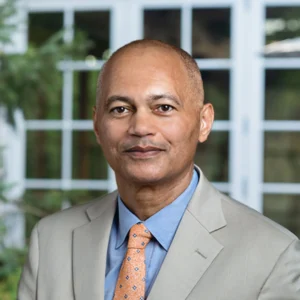
More than 40 years of university policing and public law enforcement experience, including Chief of Police for four universities after 29 years with the Columbus Division of Police. Developed a three-year strategic plan at the University of Illinois at Champaign-Urbana and served as Incident Commander for dignitary visits and major special events at The Ohio State University. Conducts CALEA accreditation assessments.
View Bio
More than 40 years in law enforcement and security, beginning as a police lieutenant at NC State and including service as Chief of Police at Eastern Virginia Medical School. Founded and led a campus police and public safety department for 22 years. Core expertise includes arming, active assailant response, conflict management training, and workplace violence prevention.
View Bio
More than 25 years of law enforcement and campus security experience in Florida, including Assistant Director of Campus Security at Polk State College and Director of Safety and Security at Southeastern University, where he manages sworn deputies, security officers, and contractors across multiple campuses. Authors institutional security policies, oversees event security logistics, and directs staff selection, training, and firearms qualifications for the university’s active assailant preparedness program.
View Bio
More than 30 years of policing and public law enforcement experience, including 25 years with the Upper Arlington Police Division, culminating as Chief of Police, and service as Deputy Chief of Police with The Ohio State University Department of Public Safety. Core expertise includes CPTED, emergency management, multi-hazard planning, and special event and venue security planning.
View BioYes. SRMC’s education work includes private and boarding schools, as well as colleges and universities ranging from individual campuses to complex, multi-campus institutions. Our consultants bring extensive experience leading and advising campus safety and security programs at educational institutions across the country.
Yes. SRMC conducts independent arming studies to help leadership make an informed decision about whether armed security personnel or a campus police department is appropriate for the institution. We evaluate factors such as the campus environment and risk profile, existing public safety or security model, staffing and training requirements, current and historical incidents, response capabilities, relationships with local law enforcement, and the operational implications of introducing firearms. The goal is not to advocate for or against arming, but to provide leadership with an objective basis for making the decision.
SRMC does not conduct Clery Act compliance audits or determine whether an institution is in legal compliance with the Act. Our work focuses on evaluating campus security risks, policies, procedures, operations, and protective measures and developing practical recommendations to strengthen the institution’s overall security program.
The schedule depends on the size and complexity of the institution and the scope of the assessment. A single facility may require one to five days of on-site work, while a large campus or multi-campus system may require several days to several weeks. Following completion of the final site visit and receipt of the information needed for the assessment, SRMC typically provides the written report within 30 to 45 business days.
Yes. Public safety staff, including campus police and security personnel, are important partners in the assessment process. Depending on the scope, SRMC may also work with representatives from facilities, planning and construction, information technology, transportation and parking, residence life, emergency management, and other departments. This collaborative approach helps us understand how security operates across the institution and develop recommendations that are practical within the campus environment.
For many institutions, the assessment establishes the foundation for what comes next. SRMC can help translate the findings and recommendations into a security master plan, develop security technology designs, assist with procurement and bidding, support the recruitment of security leadership, and develop policies, procedures, and training programs. This provides continuity from assessment and strategy through planning and implementation while allowing the institution to determine which services it needs at each stage.
Every campus has different risks, priorities, and challenges. A discovery call gives us the opportunity to understand yours, discuss what you want to accomplish, and identify the right next step for strengthening your security program.


